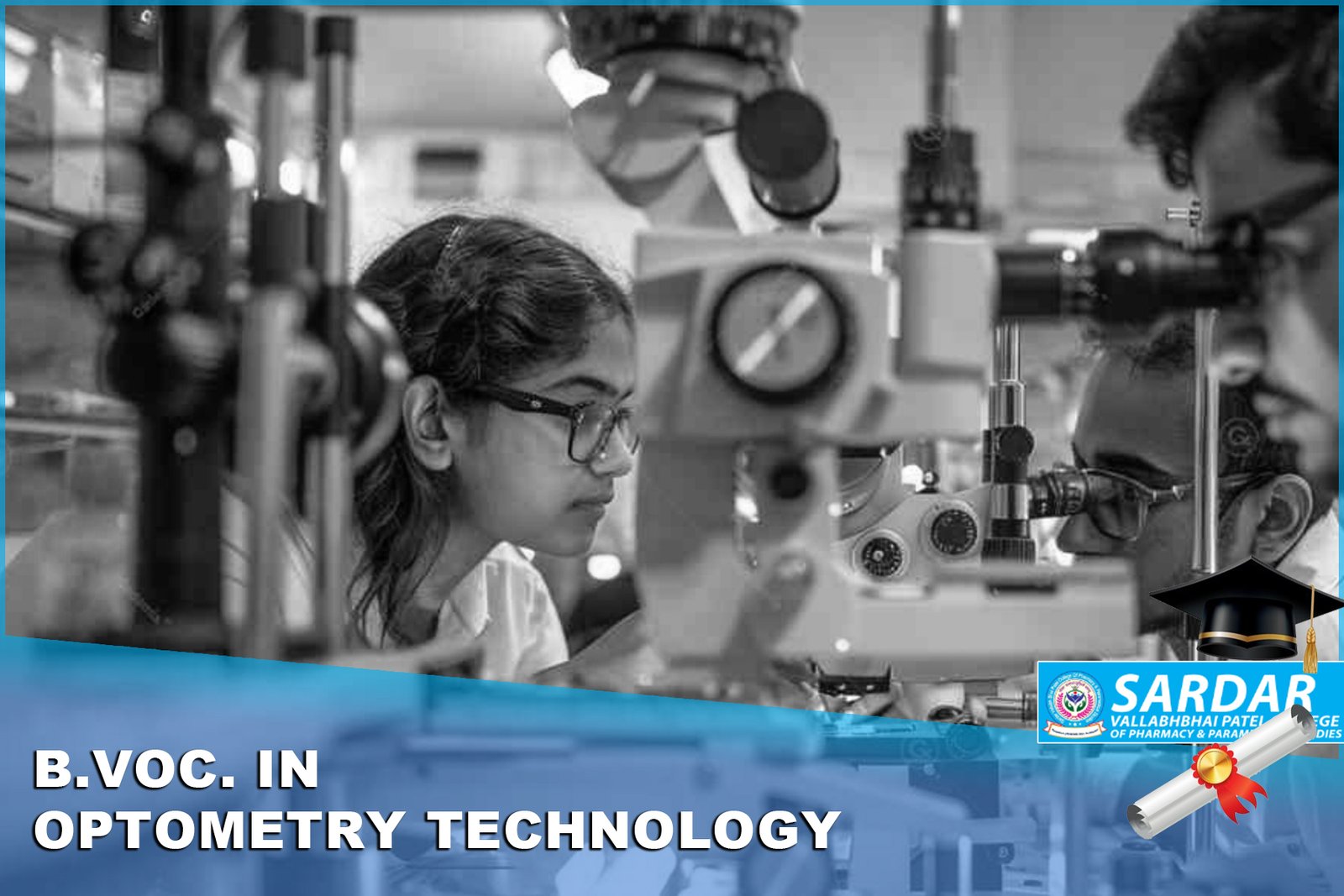
B.Voc in Optometry Technology is a 3-year skill-based undergraduate program that focuses on the examination, diagnosis, and management of vision-related problems. This course is designed for students who want to build a career in eye care without becoming a doctor. Students learn how to examine vision, prescribe corrective lenses, detect eye diseases, and manage optical equipment. With the growing awareness about eye health and increasing screen time in daily life, the demand for trained optometrists is rising rapidly in hospitals, optical stores, and eye care clinics. This program trains students both academically and practically to become confident professionals in the field of optometry.
Course Details – B.Voc in Optometry Technology
This 3-year vocational course combines classroom learning with intensive clinical training in optometry. The syllabus covers topics like human eye anatomy, optics, vision testing, lens dispensing, refraction techniques, and early detection of eye disorders. Students also learn how to use modern diagnostic tools such as autorefractors, slit lamps, retinoscopes, and keratometers. In addition to visual examination and spectacle prescription, the course includes modules on patient interaction, optical store management, and basic contact lens practice. Through regular internships in eye hospitals and optical labs, students gain hands-on experience that prepares them for jobs in eye care centers, retail optics, or even to start their own clinic.
Examination Pattern – B.Voc in Optometry Technology
The examination system is structured to assess both theoretical knowledge and clinical abilities. Each semester includes written exams on subjects like optics, visual science, and eye anatomy, followed by practical exams on eye testing, lens fitting, and use of optical instruments. Students are also evaluated through viva voce, assignments, and internal assessments that include attendance, lab performance, and clinical behavior. Final year students may also be required to submit project reports or conduct case presentations. The comprehensive exam pattern ensures students develop diagnostic precision, technical confidence, and patient handling skills necessary for a successful optometry career.
Syllabus – B.Voc in Optometry Technology
Syllabus Introduction
The syllabus is thoughtfully designed to help students understand the science of vision and the techniques of optometric care. It blends foundational theory with practical training to produce skilled optometry professionals ready to work in clinical and commercial eye care settings.
Year 1: Fundamentals of Vision & Eye Science
Human Eye Anatomy & Physiology
General Optics
Visual Optics
Communication Skills in Healthcare
Introduction to Optometry Equipment
Basic Computer Applications
Environmental Science
Year 2: Intermediate Optometry & Clinical Training
Refraction Techniques & Retinoscopy
Low Vision Aids
Dispensing Optics (Spectacles & Frames)
Ocular Pathology – I
Contact Lens Practice – I
Clinical Posting – Eye OPD
Medical Ethics & Record Maintenance
Year 3: Advanced Eye Care & Practice
Ocular Pathology – II
Advanced Contact Lens Techniques
Optical Store Management
Community Eye Health & Eye Screening Camps
Diagnostic Instruments: Slit Lamp, Keratometer, Fundus Camera
Internship / Hospital Posting
Project Work / Case Study
Additional Highlights:
Practical training in vision testing, refraction, and spectacle fitting
Hands-on exposure to modern optical instruments
Regular eye camps and real patient interaction
Training in soft skills, retail optics, and clinic setup