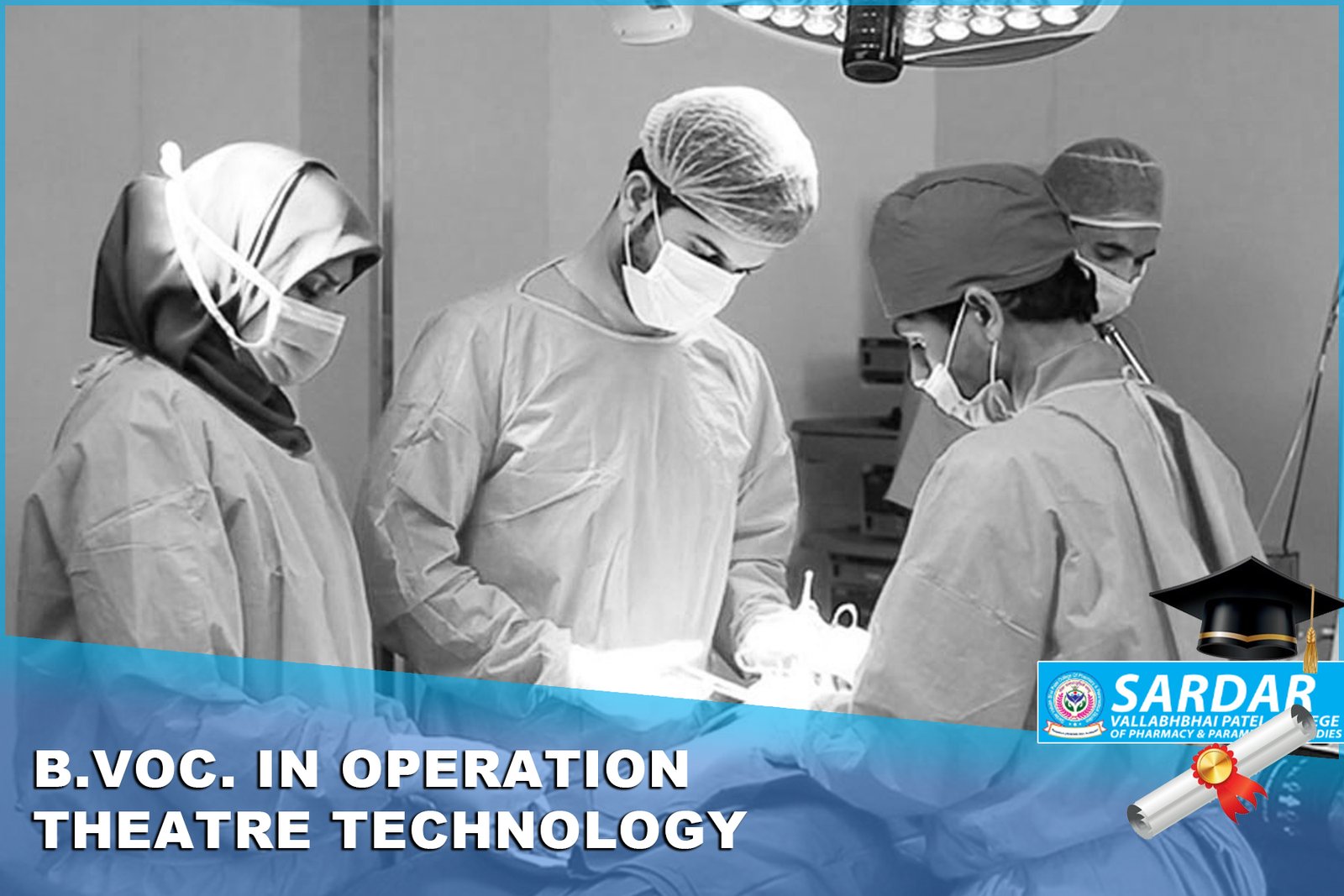
B.Voc in Operation Theatre Technology is a 3-year undergraduate vocational program that trains students to work as skilled OT technicians alongside surgeons, anesthetists, and nurses during surgeries. The course focuses on preparing students for pre-operative, intra-operative, and post-operative procedures. They are taught to maintain operation theatre (OT) hygiene, sterilize surgical instruments, manage anesthesia equipment, and assist the surgical team efficiently. This course is perfect for students who are detail-oriented, disciplined, and want to be part of life-saving surgical environments. With rising demand for trained OT professionals in hospitals and surgical centers, the program offers excellent career growth and job stability.
Course Details – B.Voc in Operation Theatre Technology
This 3-year program is divided into six semesters and combines theoretical concepts with practical hospital-based training. Students learn about human anatomy, surgical procedures, microbiology, anesthesia techniques, instrument handling, and infection control. The course also includes modules on surgical gowning, draping, sterilization protocols, and emergency management. Clinical postings are provided in real hospital operation theatres, where students assist during surgeries and learn the workflow inside a sterile environment. The program also focuses on communication skills, patient safety, record-keeping, and teamwork. Graduates are eligible to work in multi-specialty hospitals, trauma centers, ICUs, and emergency surgery units as Operation Theatre Technicians.
Examination Pattern – B.Voc in Operation Theatre Technology
The examination system includes theory papers, practical demonstrations, internal assessments, and viva voce. Each semester, students appear for written exams on surgical procedures, OT techniques, anatomy, and microbiology. Practical evaluations test their ability to assist during surgery, maintain sterilization, and handle surgical equipment. Continuous internal assessment is based on clinical performance, attendance, logbook maintenance, and teamwork. Students also complete case studies and real-time surgical observations. In the final year, they may submit project reports or participate in skill assessment tests. This robust exam system ensures students are fully prepared to handle the critical responsibilities of an OT technician.
Syllabus – B.Voc in Operation Theatre Technology
Syllabus Introduction
The syllabus is carefully curated to offer a deep understanding of surgical sciences, OT practices, and emergency handling. It includes foundational science, instrument training, infection control, and direct exposure to live operation theatre environments.