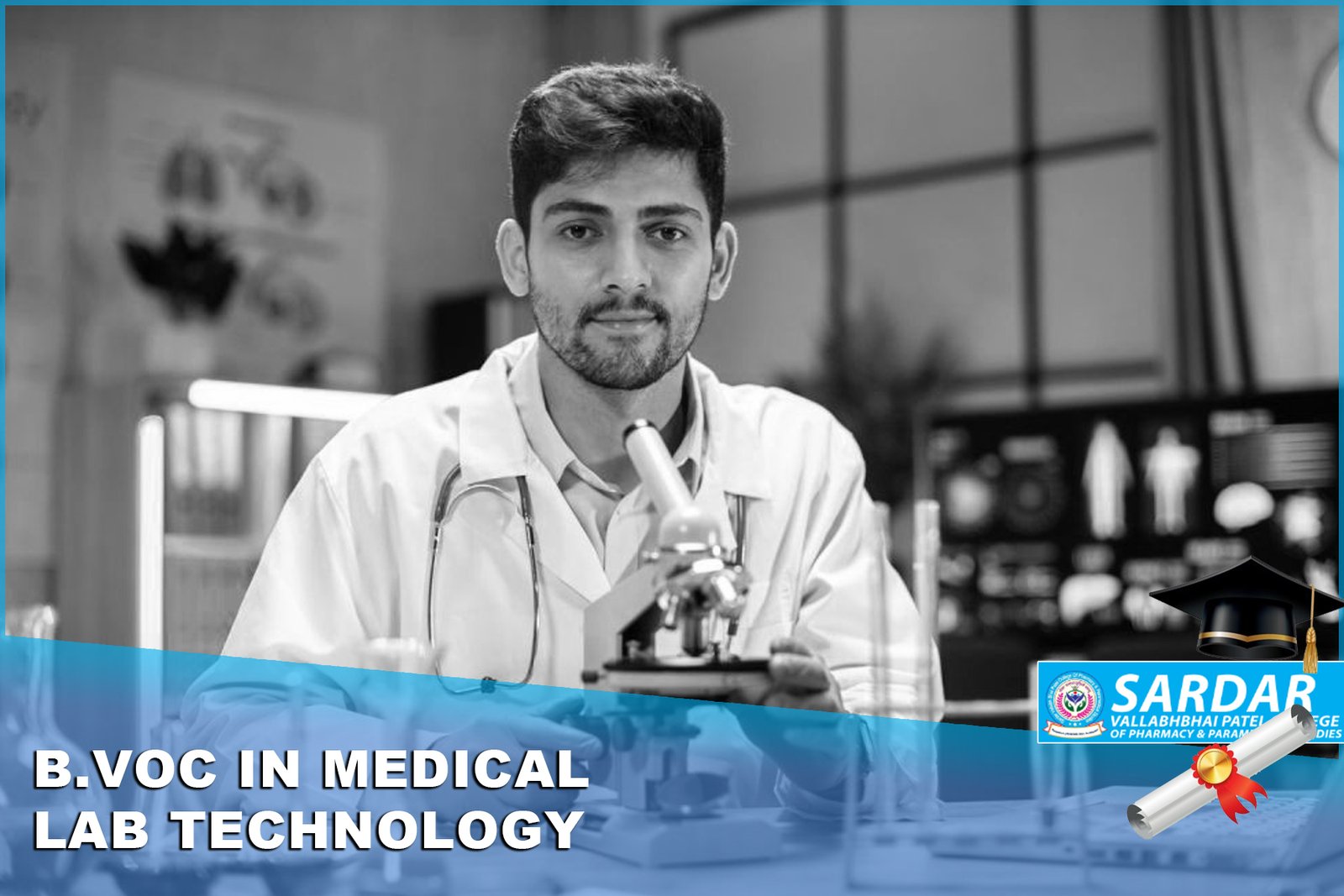
B.Voc in Medical Lab Technology is a three-year skill-based undergraduate degree program that prepares students to work as professional lab technicians in hospitals, pathology labs, diagnostic centers, and medical research facilities. The course focuses on teaching students how to collect, analyze, and interpret body samples such as blood, urine, and tissue for accurate diagnosis and treatment. With a perfect blend of theoretical knowledge and practical exposure, students gain hands-on experience in real lab environments using advanced diagnostic equipment. The course is ideal for students who wish to build a stable and respected career in the healthcare industry without going for MBBS or higher medical education. It is recognized by UGC and structured to meet the current demands of the medical industry. Students also get exposure to ethics, safety standards, infection control, and soft skills that are vital in a clinical setting.
Course Structure of B.Voc in Medical Lab Technology
The B.Voc in Medical Lab Technology program is thoughtfully designed to combine theoretical knowledge with practical skills across three academic years. Students gain deep understanding of lab science, testing techniques, and diagnostic procedures. Each year builds their capabilities to work confidently in real healthcare settings.
Year 1: Foundation Subjects
Human Anatomy & Physiology
Basics of Medical Lab Technology
Biochemistry – I
Hematology – I
Communication Skills & Professional Ethics
Introduction to Lab Instruments
Basic Computer Applications
Environmental Science
Year 2: Core Technical Skills
Clinical Pathology & Parasitology
Biochemistry – II
Hematology – II
Microbiology – I
Histopathology & Cytology – I
Sample Collection & Handling Techniques
Quality Control in Labs
Biomedical Waste Management
Year 3: Advanced & Specialization Modules
Microbiology – II
Blood Banking & Transfusion Techniques
Immunology & Serology
Histopathology & Cytology – II
Advanced Diagnostic Techniques (ELISA, PCR, etc.)
Hospital Internship / Lab Posting
Lab Management & Medical Ethics
Project Work / Case Studies
Examination Pattern – B.Voc in Medical Lab Technology
The examination pattern for B.Voc in Medical Lab Technology is divided into theoretical, practical, and internal assessments. Each semester or year includes subject-wise written exams covering all theoretical aspects like physiology, pathology, lab management, and more. Students must also appear for practical exams where they demonstrate their ability to perform diagnostic tests, use lab instruments, and follow proper procedures. Viva voce (oral tests) are conducted to evaluate conceptual clarity and communication skills. Internal assessment marks are based on attendance, class performance, practical records, and assignments. Some semesters may include project work or case studies that simulate real-world scenarios. To pass, students must secure a minimum percentage in both theory and practical components separately. The balanced exam system ensures students are prepared both academically and practically for real-time lab work in hospitals or clinics.
Syllabus – B.Voc in Medical Lab Technology
The syllabus of B.Voc in Medical Lab Technology is structured to provide a deep understanding of various lab-related subjects along with practical skills. Major topics include Human Anatomy and Physiology, Biochemistry, Clinical Pathology, Hematology, Microbiology, Blood Banking, Histopathology, Cytology, and Immunology. Students also study Environmental Science, Communication Skills, and Computer Applications in healthcare. The course includes industry-focused training modules on infection control, biomedical waste management, quality assurance, and laboratory safety procedures. As the program progresses, students move from basic lab skills to advanced diagnostic procedures like ELISA, PCR, and automation in testing. The curriculum is updated regularly to include the latest trends in medical diagnostics, technology upgrades, and regulatory standards. It also includes compulsory internships and lab postings in hospitals, allowing students to apply their learning in real-time environments and develop confidence as future lab professionals.